Mammalian Conservation Ecology
Meaghan N. Evans
I'm a wildlife ecologist working on the conservation of mammals, especially carnivores, in landscapes altered by agriculture and development.
Biological Scientist · Fish & Wildlife Research Institute
Florida Fish and Wildlife Conservation Commission
Ph.D., Cardiff University
- Study systems
- Lowland Borneo · Florida
- Focal taxa
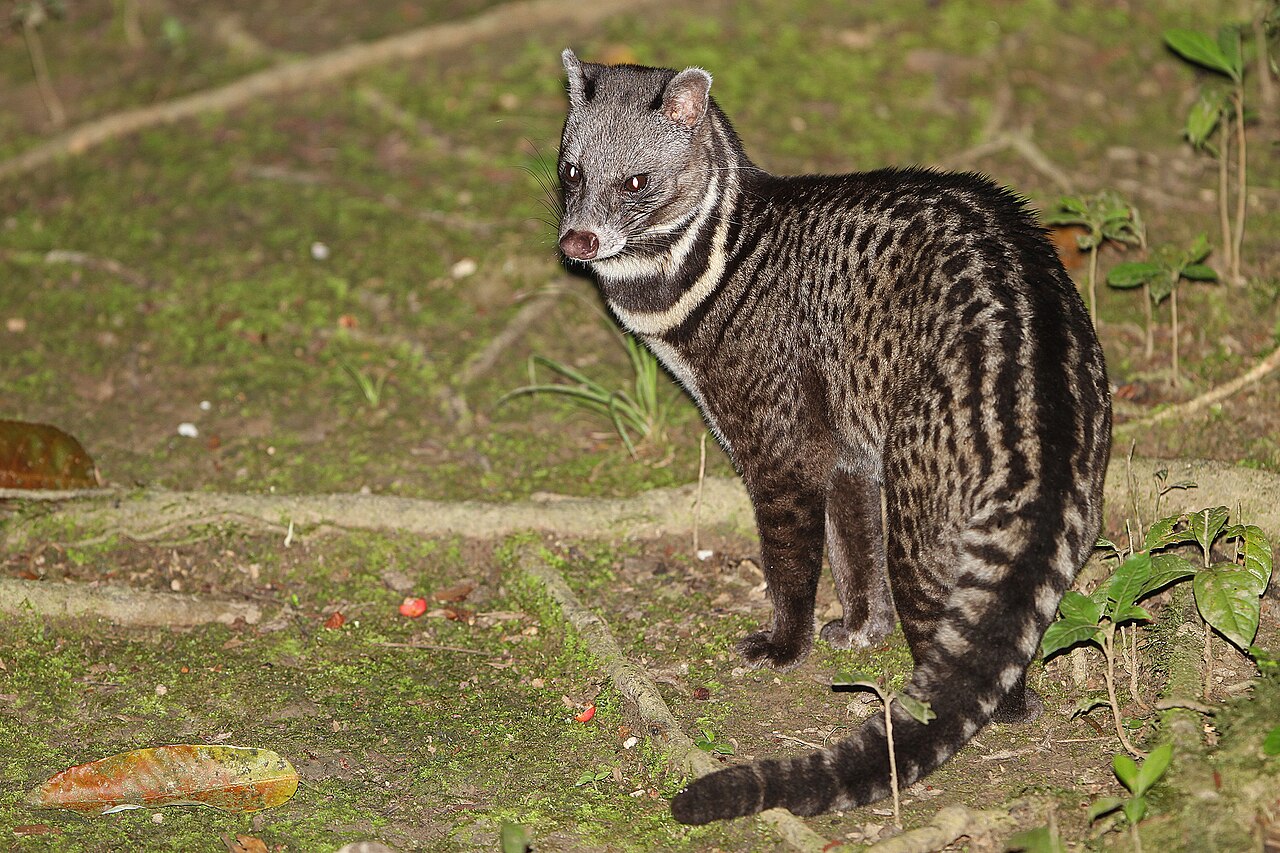
- Civets, clouded leopards, otters & small carnivores
- Methods
- GPS telemetry, camera traps, ecotoxicology, physiology
- Pressures
- Habitat loss, agriculture, emerging disease
01 About
Background
I'm a mammalian conservation ecologist interested in how carnivores and other wild mammals use, and cope with, human-modified landscapes. My work combines live-capture, GPS telemetry and camera trapping with physiological and toxicological sampling, so I can relate where animals go to how healthy they are.
I've been interested in animals for as long as I can remember, and I paid for my early fieldwork with environmental education and research assistant jobs. Time at the Cheetah Conservation Fund in Namibia convinced me to work on mammals. At Miami University I studied prairie vole behaviour. In 2012, as an undergraduate volunteer, I spent two months running camera traps for clouded leopards in the Kinabatangan, and that led me back to Borneo for carnivore research.
I did my Ph.D. at Cardiff University, based at Danau Girang Field Centre in the Lower Kinabatangan floodplain of Sabah, Malaysian Borneo, where I spent six years as a research scientist and field leader. I set up and led the Kinabatangan Small Carnivore Project, which looked at how civets and other small carnivores cope with forest fragmentation and oil palm. We designed it with the Sabah Wildlife Department so the results could feed into state planning for small carnivores and into reducing agricultural pollution. My team live-trapped and sampled more than 100 small carnivores and deployed 29 GPS collars on Malay and common palm civets, the first GPS tracking of any viverrid. With colleagues at Arizona State University, I've since combined those tracks with airborne LiDAR and hyperspectral data to look at how forest structure shapes space use.
I'm now a Biological Scientist at the Florida Fish and Wildlife Conservation Commission's Fish and Wildlife Research Institute, where I've worked on long-term wildlife population monitoring and wildlife disease investigations, including H5N1 avian influenza.
I've also been involved in conservation planning. I was a technical advisor for the Sunda Clouded Leopard Action Plan for Sabah (2018–2028), which the Sabah State Cabinet adopted in 2019, and I contributed to the IUCN Otter Specialist Group's Global Otter Conservation Strategy.
02 Research
Research areas
My research falls into four related areas, all concerned with how mammals respond to habitat loss, agriculture and disease.
-
Movement & space use in fragmented landscapes
Using GPS telemetry and camera traps to understand how carnivores move through forest fragments, plantations and edges.
-
Wildlife health, physiology & ecotoxicology
Measuring blood profiles and exposure to metals and agrochemicals in wild carnivores living near agriculture.
-
Emerging disease & long-term monitoring
Long-term population monitoring and disease surveillance, including work on H5N1 avian influenza in wildlife.
-
Natural history of understudied mammals
Camera trapping and surveys of little-studied species, including the first activity data for the Sunda stink-badger and a new record of the otter civet.
04 Teaching
Teaching and mentoring
I teach mammalogy and wildlife field techniques with an emphasis on hands-on fieldwork. At Danau Girang Field Centre I coordinated more than 50 university field courses, with over 800 students from 16 institutions, and I mentor undergraduate and graduate students through their own research projects.
05 Contact
Collaborations and students
I'm always happy to hear from potential collaborators, and from students interested in mammal ecology and conservation.